RCB sale 2026: what is happening with the franchise
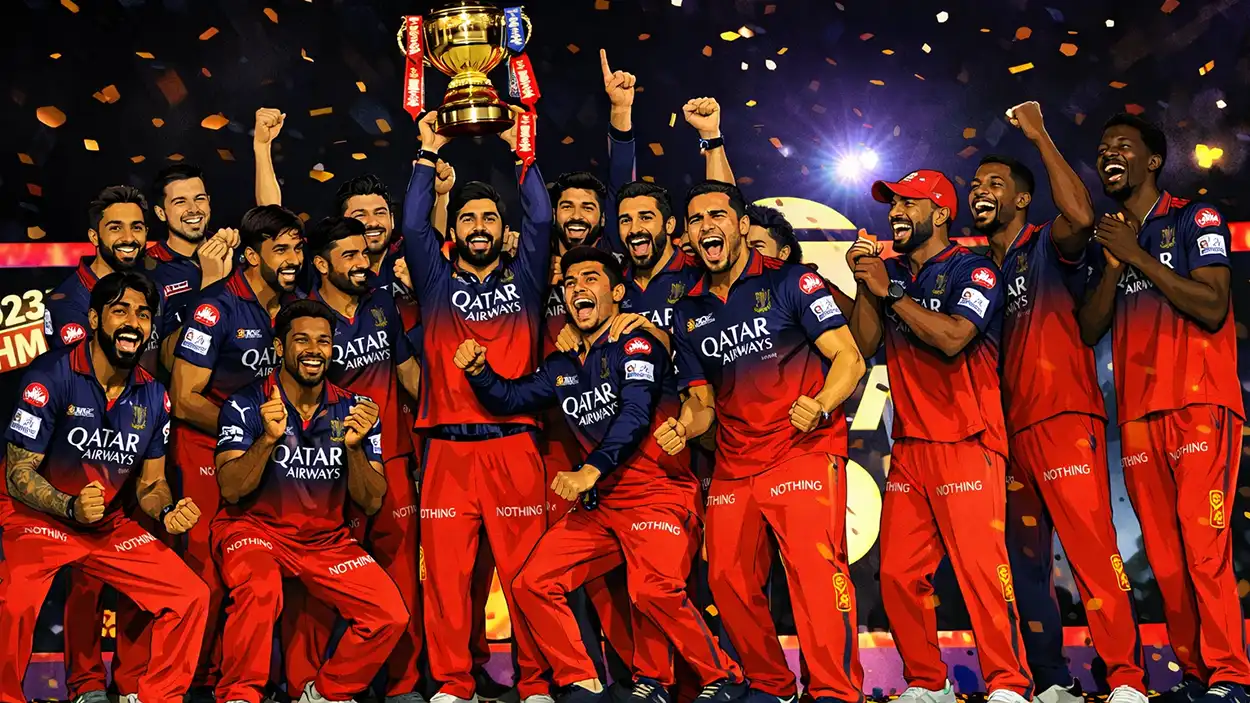
Royal Challengers Bengaluru enter IPL 2026 not only as defending champions, but also as one of the most talked-about assets in global cricket. After securing their first title in 2025, the club’s value and visibility increased significantly. Against this backdrop, reports about a potential sale of the franchise have emerged. This is no longer a theoretical scenario, but an active process attracting major investors.
The parent company is reportedly considering an exit from the asset. The main driver is shareholder pressure and a renewed focus on core business operations. While there has been no official confirmation of a sale, the level of activity around the club suggests that changes are highly possible.
RCB in 2026 are not just a team — they are an asset valued at around $2 billion.
Why RCB could be sold
After an 18-year wait, RCB finally won the IPL and significantly increased their market value. However, for the current owners, the franchise is not a core business asset. This has become a key factor behind discussions of a potential sale.
From an investor perspective, the timing is favourable. The team is at peak popularity, and the brand remains one of the most recognisable in the league. This creates optimal conditions for a high-value transaction.
- Increased valuation after winning the title
- Shareholder pressure
- Focus on core business activities
- Strong investor interest
Together, these factors make a potential sale financially logical.
Who is interested in buying RCB
Multiple major players across industries have shown interest in acquiring the franchise. The list includes entrepreneurs, investment funds, and international groups. This highlights RCB’s position as one of the most attractive assets in the IPL ecosystem.
- Adar Poonawala (Serum Institute)
- Parth Jindal (JSW Group)
- Adani Group
- A Delhi-based billionaire with multi-sector interests
- Dr Ranjan Pai (Manipal Group)
- Azim Premji (Wipro)
- EQT (Swedish private equity firm)
- Avram Glazer (Manchester United co-owner)
- David Blitzer (Blackstone)
- Ranjan Pai consortium with Temasek
This list demonstrates that interest in RCB extends far beyond India, involving global investment entities.
Who reached the final stage
The key deadline was March 16, when final bids had to be submitted. After this stage, the number of contenders was reduced. According to available reports, two main parties remain in the final phase.
- EQT — preparing a bid in the range of $2–2.1 billion
- Ranjan Pai-led consortium with Temasek
These two groups are currently seen as the primary candidates to acquire the franchise. Other interested parties either did not submit final bids or were not shortlisted.
Franchise valuation and deal expectations
The financial aspect remains central to the deal. The current valuation of RCB is around $2 billion. However, not all market participants fully agree with this figure.
The difference in valuation views reflects the nature of IPL franchises as business assets. While audience engagement is high, long-term revenue predictability remains complex. Despite this, major investment groups are still willing to consider offers above $2 billion.
| Metric | Value | Notes |
|---|---|---|
| Owner valuation | $2 billion | Base expectation |
| EQT bid | $2–2.1 billion | Potential deal range |
| Previous offer | $1.8 billion | Not finalised |
The final price will depend on competition between bidders and deal structure.
Additional investor activity and previous interest
Some investors showed interest but did not reach the final stage. For example, Avram Glazer reportedly submitted a $1.8 billion bid but did not complete the process. This suggests that even large investors may hesitate at current valuation levels.
Other groups such as Adani and JSW already have connections within IPL structures. This adds complexity, as ownership rules and existing stakes may influence deal feasibility.
- Avram Glazer — bid submitted but not finalised
- JSW Group — existing stake in DC
- Adani Group — prior interest in IPL expansion
- David Blitzer — explored IPL ownership opportunities
These examples highlight strong interest in IPL assets, while also showing that transactions depend on precise alignment of expectations.
What a sale would mean for RCB
A change in ownership could impact the strategic direction of the club. This includes financial management, long-term planning, and operational structure. The entry of a private equity firm or global investor would likely reshape decision-making processes.
At the same time, the sporting identity of RCB remains stable. The team continues to hold one of the strongest brands in IPL, supported by a large and loyal fan base. This ensures that the franchise will remain a central figure in the league regardless of ownership changes.
RCB in 2026 sit at the intersection of sport and business — and that defines their trajectory.
Clarity is expected in the coming months. If a deal is completed, it will likely rank among the largest transactions in IPL history. If not, the franchise will still retain high investor interest going forward.